
Starting Point
I’m not sure why I became so fascinated with my great-grandfather. I think it likely started because I was indirectly named for him. He was a ‘Charles’ and his second son (Charles Josiah) was too. I was named after the second Charles, my grandfather, but I think I was as much fascinated by late nineteenth-century American history as anything, and my great-grandfather was born into that Industrial Age. My interest may also have been piqued because our lives had what I considered some unique parallels. Well, that’s not exactly true. We were born almost 100 years apart and our lives evolved in a way that seemed to parallel, even though his business success certainly outshone anything I accomplished. There’s also an introspective thing that happens as I get older and I wonder about my legacy and what people might remember of me one hundred years from now. I have no control over that but realized perhaps no one was likely thinking of my great-grandfather so I decided to try and get to know everything there was to know about him. It is sort of a challenge to find traces of someone who didn’t necessarily intend to leave traces. Therefore, It became a type of treasure hunt. Selfishly, I also thought that if I gave him some attention perhaps someone in the future might afford me the same consideration. I know this is naive and wistful…but it’s mine and I own it.
So, I set off on a search and although he wasn’t a famous industrialist and didn’t create monopolies that survived one hundred years he did leave a ‘footprint’ of places he’d been and things that he’d done. I felt compelled to trace his path and learn more about him. I wish I had known him personally and my quest was to try and discover who he was and to take just a peek into the life I think he led (to get to know him as best I could with what I could find). In addition, I tried to learn what I could of his family in the hope that it might shed additional knowledge about him. This piece, therefore, is the result of my journey to find the man who was my great-grandfather and to tell a story that resembles a glimpse of who he was in the time he lived. I will try to be true to the facts and will attempt to document all I find in case someone wants to follow behind and either dispute my conclusions or try to discover things I may have missed (or misinterpreted).
I hope you enjoy reading the results of my quest. I hope it gives you pause about your own legacy. And, if you and I are related, I hope it also provides you with some insight into who we are and how we got here.
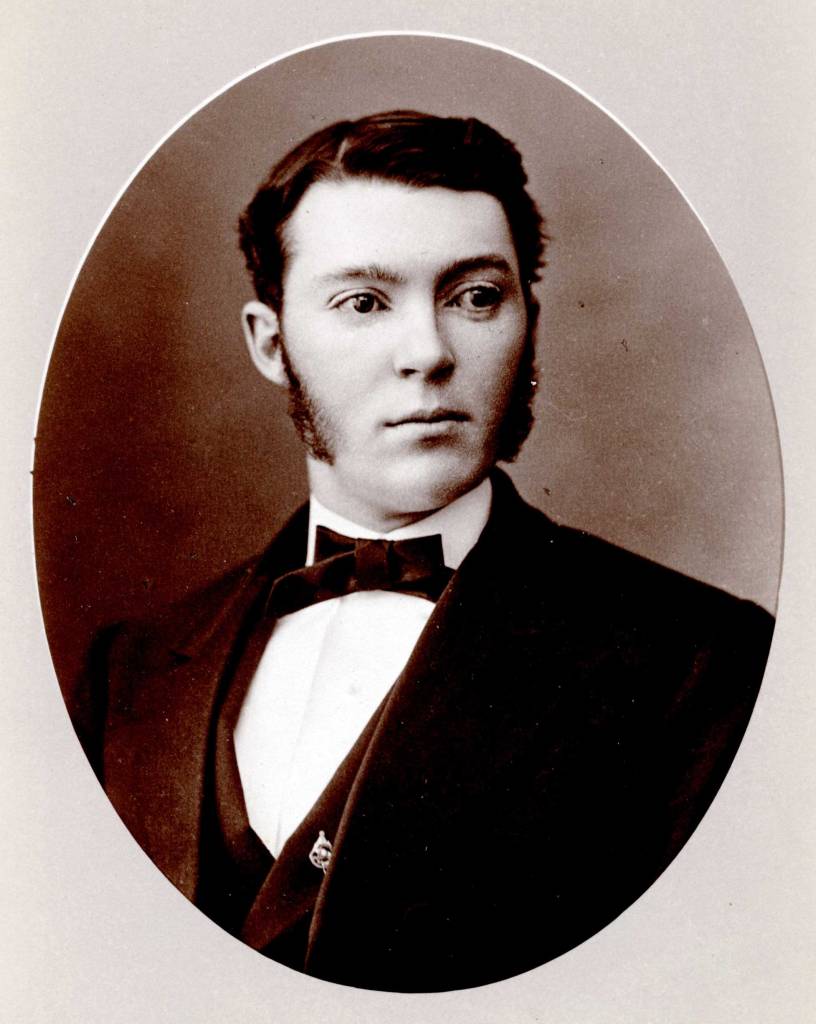
“Please remember me to Marion and Donald.”
Charles Herbert Maxcy
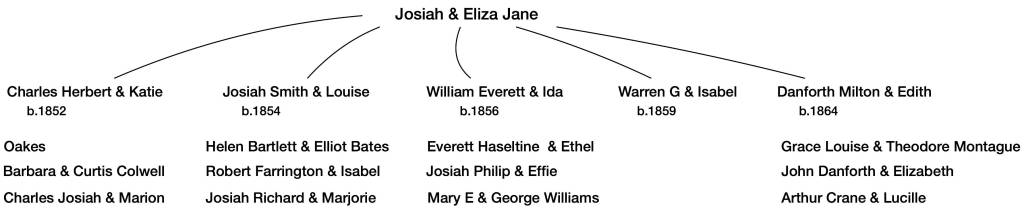
Maxcy’s in Maine
Genealogy has always seemed like a boring study. People related to me by blood but distanced by time and circumstance haven’t really held the appeal. It’s like history lessons in school. Names and dates on paper with nothing to relate to except in this case, they are literally related to me. My family also has a limited oral history and so there aren’t many stories that are part of my DNA. By the time I was interested in hearing about the past generation, or two, everyone who could tell me was gone.
The research I started on my great-grandfather, however, uncovered additional relatives who contributed to his narrative, and so my interest in others was heightened. One really can’t tell a story about a relative without telling a story about other relatives. None of us live in a vacuum and admit it or not, we have relatives.
Sometime in 1838, Josiah Maxcy (my great-great-grandfather), his father, and at least two of his brothers moved from their home near Windsor, Maine, to Gardiner, Maine. Gardiner, Maine, is an interesting place and would become the home for various Maxcy family members for the next 100 years or so. Gardiner was named for Dr. Silvester Gardiner, who was a prominent physician and made his fortune prior to the American Revolution. He became one of the most wealthy individuals in the Colony by importing drugs for distribution. He and a consortium of other businessmen purchased thousands of acres in what is now Maine, and Dr. Gardiner picked the best location for himself. The city of Gardiner is located alongside the Kennebec River, where the Cobbossee Stream flows into it. The stream had a precipitous drop during its last few miles, which was perfect for building dams in places and erecting mills.
By 1845, the town was being established and people were moving into the area. Josiah Maxcy’s father had experience building mills and this provided a natural transition for Josiah to take over the running of Gardiner’s first grist mill along the stream near downtown. Josiah was good at managing the mill. This quality came to the attention of Dr. Gardiner’s grandson, Robert Hallowell Gardiner, who had inherited the land from his grandfather and was developing the town. Robert Hallowell hired Josiah to manage his own business affairs which he did for the next 40 years. The city of Gardiner was founded in 1849 and continued to grow as it was a perfect location for the lumber and shipbuilding enterprises.

The Family Maxcy
The Family Maxcy embraced Gardiner with enthusiasm, and for the next twenty years, the family’s experience was exceptional. Josiah opened a plaster mill for Robert H. Gardiner, across from the grist mill, in 1847. Josiah’s father, Smith, was appointed a Measurer of Corn by the city in 1848. One of Josiah’s brothers (Reule) was on the city council, a Measurer of Grain and later was in the clothing and fabric business; his brother (Sanford Newton) was involved in grain sales, dry goods, and later manufacturing; while another (Ira) became a ship captain piloting boats along the Kennebec, the coast of Maine and out to sea. Josiah became involved in the community and was a founding member of the Sons of Temperance – Warren Division. Then on November 26, 1851, Josiah married Eliza Jane Crane in Lynn, Massachusetts.
At this point, I don’t know much about Eliza Jane nor why they married in Lynn. Eliza Jane was also from Warren, Maine, but how they met and why they married in another state is pure speculation. What is known is that the pair settled in Gardiner and on September 29, 1852, their first child, Charles Herbert (my great-grandfather), was born. Josiah and Eliza Jane’s family continued to grow. Josiah Smith was born in 1854, followed by William Everett in 1856, and Warren Gardiner in 1859.
Josiah’s standing in the community continued to grow as he joined the Mechanics Association and the newly formed Republican Club, but he then declines an opportunity to become City Clerk when it was offered.
The family business went well and they constructed a building adjacent to the flour mill. They rented the available spaces to various businesses including a dentist (George Reed), a newspaper (Maine Rural), two grocers (J & S.N. Maxcy and B.F. & J.M. Johnson), a residence (for the dentist and wife), a dress shop (Mrs. Hinkley’s) and storage for the grocers. The red brick three-story building was called the Maxcy Block and sat on the corner of Water and Bridge streets.
There were, however, dark moments in the town and family’s history. On April 25, 1860, a large fire started in one of the other mills and tore through downtown Gardiner. It destroyed about thirty buildings, including the mills on Cobbossee Stream and the entire three story Maxcy Block building. Insurance helped cover some of the losses, and the town rebuilt.
And then there was the Civil War. Josiah’s father, Smith, had remarried after Josiah’s mother (Clarisa Boggs) died in 1839. He and his new wife, Mary (who as it turns out was Eliza Jane Crane’s sister) had a son. His name was Danforth Milton, and he was born in 1842. This made him just the right age to join the war when it started in 1861. Little Dan, as some referred to him, was a good soldier and served several campaigns without incident. Then came July 4, 1863, and Gettysburg. While serving as the corporal of the color guard for Third Maine, he took a bullet to the leg. He survived the initial wound and the subsequent amputation but died on August 14, nearly six weeks later. He is buried in Gardiner. Josiah and Eliza Jane named the last of the five sons after him. Danforth Milton Maxcy was born in 1864.
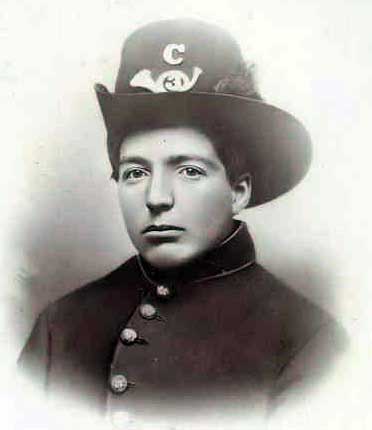
Formative Years
Josiah’s business acumen continued to grow along with the respect he garnered within the city. In 1854, he helped form the Gardiner Gas Light Company and would later become its treasurer. In 1864, Robert Hollowell Gardiner died but by then Josiah was in full command of managing the various Gardiner family businesses and continued to do so after Robert Hollowell’s death. To supplement his income, or to take his life in a new direction, in 1863, Josiah became an agent for the Hartford Insurance Company. In 1864, he started his own insurance business with an office in the Lincoln and Maxcy building which is just a few blocks down Water Street from the Maxcy Block building the family still owned. Josiah’s sister, Angeline, had married Joseph R. Lincoln and the two men had partnered to build the three-story building. Josiah’s main focus was to provide for his sons a strong moral foundation, a good educational background, and instill good business sense. The lessons they learned from their father would be applied over and over throughout each of their lives.
Gardiner provided a safe and nurturing environment for the Maxcy boys to flourish. Charles and Josiah Smith both excelled in their studies. The other sons may have done so too. It is believed that all five Maxcy boys graduated high school although only Charles attended college. Charles Herbert was an active baseball enthusiast and would play for the Oakland team at the age of 14. Charles would also later become president of the alumni association, as well as, a member in the Sons of Temperance like his father. The Maxcy boys flourished during their formative years in Gardiner.
In 1870, Charles Herbert attended Tufts University in Boston and began his studies in the relatively new department of Engineering. Tufts, founded by Christian Universalists who wished to fulfill the desire to create a nonsectarian school of higher education, was in the early stages of its formation. Charles Herbert lived on campus and roomed with a fellow Gardiner resident, Fred Gray. Charles played baseball on the ‘second nine’ while at Tufts and was a member of a secret Engineering fraternity that went by the name of S. F. The initials, membership, and other details are lost to history but what is evident is that Charles Herbert was well involved in life at Tufts. He graduated with a degree in Mechanical Engineering after his third year in 1873.
Josiah’s insurance business did extremely well and as the boys grew older he encouraged (and I think expected) them to join the business (the name of the business would become Josiah Maxcy and Sons). It is unclear why Charles Herbert left Gardiner for higher education in Boston, especially in a discipline unrelated to insurance, but it too was likely due to his father’s encouragement. Brother Josiah Smith may have had similar ambitions, however, he did not pursue them. He did pursue lifelong learning as his writings and speeches indicate a level of intelligence that exceeds what I believe he would have received through grade 12 in Gardiner.
When Charles Herbert graduated from Tufts, he acquired a job as a clerk with the Glendon Company in East Boston. His younger brother, Josiah Smith, became a partner in the insurance business with his father in Gardiner the year Charles Herbert graduated from Tufts.
Charles Herbert took up rooms near the Glendon Company on Trenton Avenue. Glendon was a lumber company that operated large mills cutting dimensional lumber from logs potentially sourced from logging along the Kennebec. In 1878, Josiah Smith traveled to Boston to spend time with his older brother. A letter to him from Eliza Jane seems to indicate Josiah Smith was needing a break from his life in Gardiner. If Josiah Smith was contemplating another future it was not to be, as he soon returned to the insurance business back home. Later that same year, in May 1878, the patriarch of the family, Josiah Maxcy took ill with pneumonia and died. Soon thereafter, Charles Herbert left his rooms and job in Boston and returned to Gardiner to manage Josiah’s estate.
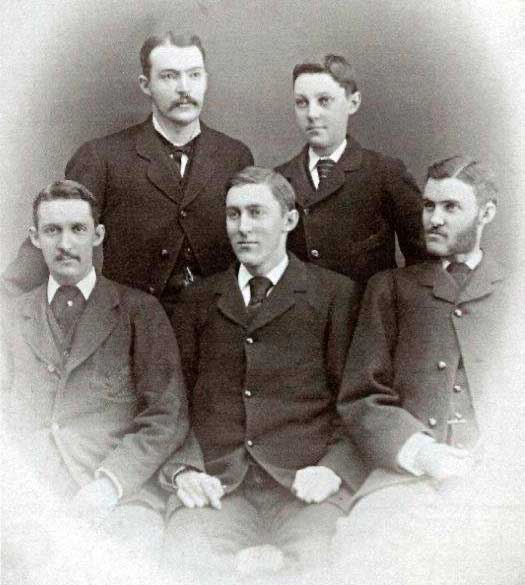
Front: William, Warren and Josiah Smith
Back: Charles and Danforth
Josiah Maxcy & Sons
For the next few years, the Maxcy boys seemed to flourish. In July of 1878, Charles and Josiah Smith announce that they will continue the business of Josiah Maxcy & Sons. Along with William Everett, the three eldest boys run the insurance business and the Gardiner family interests while looking for every opportunity to branch out. Maxcy Brothers Coal does business on Berry’s wharf (and then sells it in 1880), Charles Herbert gets his notary, applies, and receives a license to weigh hay, coal, and grain for the city. He marries the former mayor’s daughter in April of 1879. He and his new bride, Kate Mitchell, move into a property near Charles’ boyhood home on Brunswick Avenue in Gardiner.
Charles later becomes a justice. He is active in the Young Men’s Republican club and becomes very active in local Republican activities. As the administrator for Josiah’s estate, Charles actively manages the family assets along with Josiah Smith (who was appointed guardian to his younger brothers, Warren and Danforth), for the benefit of everyone including their mother. By 1880, Charles becomes an officer (Secretary) of the Cobbossee Water Company, an incorporator of the Oakland Bank of Gardiner, and treasurer of the Gardiner Gas Light Company. He also becomes the executor of Kate’s parent’s estate. In the meantime, the Maxcy boys continue working in the ice business.
In the winter when the Kennebec River froze a cottage industry erupted along the river. People in southern climates’ demand for ice exploded and ice on the Kennebec River was known for its purity. The ice, harvested in the winter was conveyed into nearby warehouses and then packed with sawdust created by the various nearby mills. When the river melted and ships could make their way again to Gardiner, the ice was loaded onto to ships that sailed south where the demand was greatest. The Maxcy business was modest but likely profitable for the short time it operated. Upon his death, Josiah held shares in both the Gardiner Ice and Kennebec Mutual Ice companies.
As well as things were going, however, Charles Herbert had bigger plans and looked toward the future. In September of 1880, he announced that he was heading west to make his fortune. He and Kate moved to Minneapolis, Minnesota, leaving Josiah Maxcy & Sons with one less son. They were now down to four.
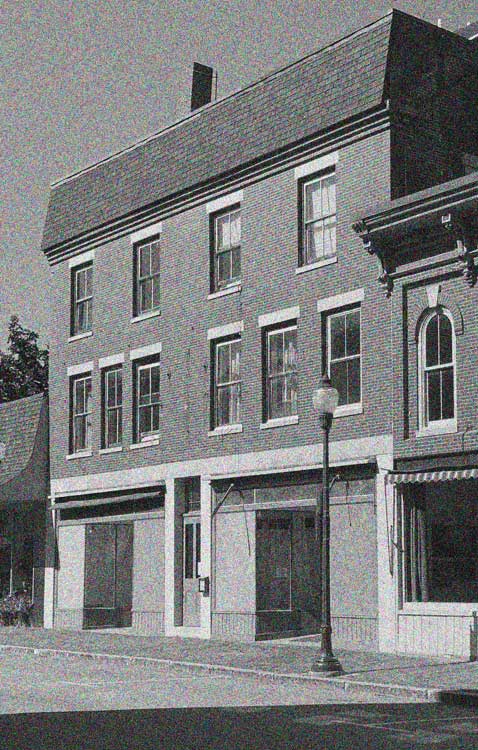
Gardiner, Maine
Mississippi Valley Lumbermen
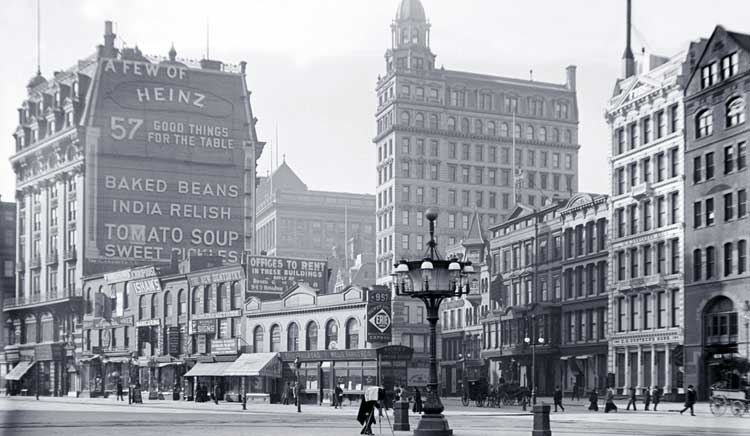
Minnesota became a state in 1858 and by 1881 the cities of Minneapolis and St. Paul were growing quickly. Just thirty years after statehood, Minneapolis had a population of almost 50,000. The nation was expanding as well and the demand for lumber to build the railroads and buildings needed for that growth had to come from somewhere. In the 1880s that somewhere was Minnesota. The Upper Mississippi River Valley of Minnesota was teaming with logging companies and mills. This is where Frederick Weyerhaeuser started and made his fortune. The abundance of water and the river concourses were great conduits for bringing those felled trees from the forests in the north downstream to mills. With Charles Herbert’s exposure to mills in Maine (his father-in-law also ran a lumber mill) and his clerking for Glendon in Boston, Charles Herbert found an employer in S G Cook. Mr. Cook was in the commission lumber business and very successful. He owned his own mills and lumberyard in addition to brokering lumber for other lumber manufacturers. He likely needed a salesman and Charles Herbert would fill that role easily in their early association. However, by February of the following year, (1882) just a few months after Charles Herbert’s move to Minneapolis, the two men incorporated their first venture together, the Minneapolis Rubber Company. In a pattern that they continued, both men were directors of the new company. Mr. Cook and Mr. Maxcy would work together for the next eighteen years creating over twenty businesses with each man amassing a small fortune for themselves. In addition, they created a legacy that survives today in the Lumber Exchange building.
Built using Lake Superior Brownstone from the quarries near Washburn, Wisconsin, the Lumber Exchange was the tallest building west of Chicago and the tallest in Minneapolis. Within five years, an additional two floors were added to the original structure along with another wing. The Edison Building was built and attached directly behind the new addition.
Charles Herbert was busy in Minneapolis associating himself with the following companies as an incorporator and or officer of each:
- Minneapolis Rubber Company – 1882
- Northern Lumber Company – 1882
- Northern Pine Land Company – 1882
- Lumber Exchange – 1885
- Flour City National Bank – 1887
- Realty Mortgage and Debenture Company – 1887
- S G Cook & Company – 1888
- Edison Light Company – 1888
- Periodical Press – 1889
- Cedar Lake Park Company – 1890
- Minneapolis Cooperage Company – 1890
- Northwestern Fire Proof Warehouse Company – 1890
- Metropolitan Trust – 1891
- Star Elevator – 1891
- Cooper Hampton Electric Company – 1892
- Lumber Exchange Barber Shop – 1892
- American Indemnity – 1892
- Edison Building Company – 1893
- Ensign Company – 1893
- Minneapolis Mutual Life Insurance Company – 1893
- National Credit Insurance Company – 1893
- South Shore Lumber Company – 1893
- Minneapolis, St. Paul & Ashland Railway – 1895
- Pioneer Threshing – 1896
- American Universal Lighting Company – 1897
- Minneapolis International Electric – 1898
Charles Herbert was active in the community. He helped form the Commercial Club (a business social and athletic club), remained active in Republican politics, and participated in professional organizations like the Northwestern Lumberman Association and the Northwestern Manufacturers Association. He attended meetings, went to conventions, and traveled with others on business tours. He helped form the Sound Money Club and served on a committee to address helping the poor.
Charles’ success must have encouraged him to recruit his youngest brothers to move West with him. Around 1884, both Warren and Danforth moved to Minneapolis and lived with Charles and Kate for a time before moving a few doors down. In addition, they both worked for S G Cook & Company. Warren and Dan would eventually move to Washburn, Wisconsin while still in Cook’s employ. Warren married Isabel Thompson who was living in Minneapolis and they then ended up in Oshkosh. Dan stayed in Washburn. Josiah Maxcy & Sons in Gardiner was now down to two brothers. William and Josiah Smith would continue to run that business for a time until William took it over fully.
Kate and Charles Herbert found success in their personal lives. In August 1882, Oakes Maxcy, Charles Herbert, and Kate’s first child was born. Oakes would be followed by Barbara in 1884 and my grandfather, Charles Josiah (Charlie) in 1887. In addition to raising children, Charles Herbert and Kate were very active. They attended the first Winter Carnival Ice Palace in St. Paul (1886) as guests of the Ice King. They hosted whist, tea, and euchre parties at their home. Every summer Kate, and sometimes Charles Herbert, took the children by train back to Maine where they spent time visiting with family, often on Squirrel or Capital Islands where other Maxcy’s owned cottages. In addition, Charles Herbert took his mother, Eliza Jane, to the World’s Columbian Exposition in Chicago in 1893. Charles Herbert and Kate bought their house which was located at 1110 1st Avenue North.
Minneapolis was a wonderful place to start businesses, raise children, and become part of the community…until decisions were made that changed everything.

Metropolitan Trust Company
I think that if you are in business long enough someone is not going to be happy with your business dealings with them. Some people are highly unethical and look for opportunities to take advantage of any perceived slight or misstep, whether that slight or misstep is intentional or not. In the late 1800s litigation was a burgeoning business and business law was evolving as monopolies and trust-busting was becoming a concern. S G Cook & Company, with which Charles Hebert was definitely the “& Company” portion of this relationship had their share of legal issues.
There were numerous lawsuits involving Cook and Maxcy. The year 1891 was especially troublesome. In February, an adjacent building to the Lumber Exchange was being constructed, and during the night a smoldering fire caused by construction heavily damaged the Lumber Exchange. Interior contents were destroyed but the building survived due to the care taken to try and make it fireproof during construction. The building was covered by insurance (represented by several insurance companies) however, a half dozen or more, lawsuits resulted from the aftermath. The actual financial drain on Cook and Maxcy is unknown but the cases carried on for a few years. Later in 1891, the Star Elevator (also owned by Cook and Maxcy and storing grain for use in Pillsbury’s mills) split and caused a fire in an adjacent mill. The grain was mostly saved and the elevator was covered by insurance but the damages to other businesses resulted in numerous legal wrangling over responsibility and compensation.
All of these problems didn’t seem to slow down Charles Herbert. For the balance of 1891 and 1892, it was business as usual. In one newspaper article about the fire in the Lumber Exchange, he shrugs off the damages and professes little concern. There is another story about the success of the Edison Building as a haven for newspaper publishing and how it is perfectly suited for this line of business. Charles continues to travel on business and pleasure. He hosts Republicans from Maine when the National Convention is held in Minneapolis. He is active in the Commercial Club and incorporates a barber shop in the Lumber Exchange. He becomes associated with the newly formed Concatenated Order of Hoo-Hoo (fraternal order of lumbermen) and continues creating new businesses and serving on boards. In 1894 the stress starts to build, however, as another newspaper article alludes to Charles Herbert having digestion issues. The stress was building toward 1895.
The Metropolitan Trust Company was formed in 1891 and was essentially a bank that had its headquarters on the first floor of the Lumber Exchange. The purpose of the trust was to loan on mortgages and to buy and sell notes of indebtedness. The bond was $2,000,000 and the incorporators included G. A Pillsbury. The plan was for the ownership of the Lumber Exchange to transfer to Metropolitan Trust once fully organized. I believe this occurred as I also believe Metropolitan Trust became the business that Cook and Maxcy channeled a lot of their other enterprises through.
What occurred next has a lot of moving parts but there was one part likely considered unethical. I believe Cook and Maxcy acquired the American Indemnity company from a group in St. Paul in late 1892. That company was reorganized into National Credit Insurance which was then sanctioned to operate in Minnesota by the state insurance commissioner early in 1893. The new company was capitalized at $110,000. The capital for the company was a mortgage on the Edison Building (held by Metropolitan Trust). The mortgage was placed with the State Treasurer per Minnesota law by Metropolitan Trust on National Credit’s behalf. The idea of placing capital with the state was to provide shareholders and policyholders recourse should the company fail. The state basically holds the bond for safekeeping in case it is needed to provide financial relief for the parties doing business with the insurance company.
The insurance credit business is a very risky one. Basically, the insurance company is selling insurance to businesses to protect those companies from losing money due to credit defaults by their own customers. This business requires tight control over the credit application process and a certain amount of trust in the people being insured. If the insured business loosens its credit application requirements and extends credit to unworthy customers to drive up sales then the insurance company may be liable for some of the loss if they don’t control the process. National Credit wouldn’t cover the entire loss by its policyholders but only a portion making the risk lower for the insurance company while making the insured more responsible for their own lending procedures. The money must have been lucrative for Cook and Maxcy to branch out into this endeavor but the economy was booming and the risks must have seemed manageable.
National Credit Insurance had offices in Chicago, Philadelphia, Boston, Cincinnati, Louisville, New Orlean, Detroit, Cleveland, and Minneapolis. They had numerous policyholders and the original company was well-established. They issued a lot of policies. The problem with booming times is that they eventually come to an end and this happened in the early 1890s. Railroad speculation and overbuilding had created a bubble and when they began to struggle and fail the Panic of 1893 began. The recession would last for four years and affect every business sector. This sudden downturn in the economy strained the resources of National Credit as more and more policyholders suffered credit losses from their customers.
In 1894, Charles Herbert filed four additional lawsuits against insurance companies associated with the Star Elevator collapse while National Credit began to struggle to meet its claim obligations. In early 1895 the insurance company was declared insolvent and Cook and Maxcy rushed to Chicago to try and resolve the matter. I suspect that their core business, lumber, was also struggling. Their efforts in Chicago apparently did not succeed. In August of that year, a judge issued a restraining order halting all business transactions by the company until a decision could be made by the court about the company’s future. Cook and Maxcy were either unable or unwilling to reorganize it so National Credit went into receivership.
Here is the questionable part. Early in 1895, the Edison Building mortgage (that had been deposited with the State Treasurer by Metropolitan Trust for the benefit of National Credit) was swapped for other mortgage papers of lesser value (reportedly $35,000). Charles Herbert is likely the person who made this swap. The mortgage on the Edison Building was then placed with a State Auditor (which would further complicate the issue later) for ‘safe keeping’. The action of switching the documents was taken without the approval, or the supposed knowledge, of the State Treasurer, but rather by one of his subordinates. When a receiver was appointed to manage the National Credit assets for its policy and shareholders, he discovered the switch and sued Metropolitan Trust and specifically Charles Herbert. Because of the complications with state employees, the case eventually went to the Minnesota Supreme Court where it was determined that the Edison Building mortgage now belonged to the receiver for the benefit of interested parties of National Credit Insurance. Cook and Maxcy lost the $110,000 asset of the building and the income it generated from its renters. In addition, the disgrace of trying to play a ‘shell game’ with the documents must have made things worse for Cook & Company’s reputation.
To compound issues, Charles Herbert and Kate struggled with their personal finances. They defaulted, or strategically defaulted, on the mortgage on their home. In early 1898 the house was sold at auction by the sheriff for the benefit of the mortgage holder. This occurred about the same time the Edison Building ownership changed hands. Charles Herbert continued to live in Minneapolis for the rest of 1898 but moved his children to Gardiner, Maine. Oakes and Charlie went to live with their grandmother, Eliza Jane, while Barbara went to her uncle Josiah Smith’s house. Josiah’s daughter, Helen, and Barbara would form a very close relationship as a result of this move. Sometime in 1899, Charles and Kate moved to New York City to begin anew.

New York, New York
In June of 1899, Oakes Maxcy was admitted to the junior class at Gardiner High School in Maine and in the fall tried out for quarterback on the football team (he made the second string). Both he and his brother, Charles Josiah, spent the entire school year of 1899 with their grandmother and this must have taken a toll on her because she apparently complained to Josiah Smith who then implored Charles Herbert to do something about the situation. In June 1900, likely after school was out, Charles Herbert escorted the three children to New York and their new home on 116th Street in Manhattan. Barbara would go back to Gardiner in the fall and complete her high school education there. She lived with both her uncle and grandmother after cousin Helen left for college at Smith. Barbara graduated from Gardiner High in 1903. The boys attended school in New York.
Being the entrepreneur that he was Charles Herbert made his way to Wall Street. By early 1901 he was listed as a Broker and as a Secretary. In addition, he was already a director for the Quakeress Concentrated Fruit Company which was a company incorporated in Maine but I couldn’t find any records of them having done anything and it disappeared within a year or two. I think in New York he returned to what he knew, sales and lumber. It appears that he worked on Broadway near Wall Street for several years as a Broker and then his listing in the City Directory changed to Investments in 1904. In 1905 he became an incorporator and director of the Precious Metals Corporation with Charles E. Force. His association with Precious Metals would lead to the Incorporation of the East Canada Smelting Corporation in Canada and a path into the mining business when Precious Metals purchased the Weedon Mine.
During the first few years in New York, Barbara continued to go back and forth to Maine and was very active in Gardiner. She spent several summers at Squirrel Island and participated fully in the social life there and in Gardiner. In 1904, Oakes enlisted in the National Guard and became a corporal in the infantry. Charles Josiah graduated high school and attended Pace Institute in New York City studying accounting. Barbara spent more time with her cousin Helen and at one point Josiah Smith took both girls with him on a tour of Italy where they met the Pope.
In 1907, Charles Herbert was an incorporator for the General Water Works and Construction Company and then is appointed Commissioner of Deeds (Notary) for the City of New York. In 1910, he is President of Adrian Land & Construction, Federal Development Company in Arizona, Charles E Force & Company. He is also a director in the company called Number One Hundred & Eight West Forty-First and another called Royilla Company of New York (a manufacturer of flavoring extracts). In 1911, he purchases at auction a six-story building on the corner of Prince and Broadway Streets in Manhattan for $84,000.
Sometime during that same year, the family moved from the city to Rutherford, New Jersey. I believe the accommodations in New York may have been sparse and the house they moved into across the Hudson was much more spacious and had a yard. Charles Herbert’s success afforded them a nicer place but whatever joy came with moving was over early in 1912. On March 4 Kate Rebecca Mitchell, Charles Herbert’s wife, fell dead on a street in Rutherford while going to visit a friend. Charles Herbert was out of town at the time conducting business in Canada and met the children and the body in Portland. Kate’s body was taken to Gardiner where a service was held in the family home on Brunswick Avenue. Kate was laid to rest in the family plot near her father-in-law’s grave in Oak Grove Cemetery. They had been married a little less than 33 years.
Charles Herbert spent a lot of his time going back and forth from New Jersey to the Weedon Mine which is near Sherbrooke, Quebec, Canada. The main ore harvested from the mine was copper and the war effort was driving demand. The mine and the accompanying smelter did well. So much so that the Precious Metals Corporation built an aerial tramway to carry the ore the five miles from the mine to the mill.
Maine Again
Sometime in 1914, Charles Herbert focuses most of his energy on the Weedon Mine and moves his residence to Portland, Maine. The Grand Trunk Railroad in Canada had a direct line between Portland and Sherbrooke so he can easily board trains that took him within 30 miles of the mine operation thereby cutting the time he would have taken to get to Portland from New Jersey. Oakes also moves to Portland and begins working as a clerk for his cousin Robert Farrington. Robert owned and operated a cabinet shop that sold display furniture to businesses. Robert’s need for a clerk apparently coincided with his younger brother, Richard’s, recent marriage and move to Arizona as Richard was previously a clerk in his brother’s employ.
In May 1914, the family suffers another loss when Eliza Jane, Charles’ mother, dies in Gardiner. She is laid alongside Josiah in the family plot near Kate.
While Charles Herbert continued to grow the mining business (by incorporating the Electric Zinc Company and The Zinc Company, Limited in Sherbrooke with L.D. Adams), Barbara continued to spend about half her time in Maine while Charles Josiah continued to clerk in New York City. They both maintained their residence in Rutherford.
Perhaps driven by grief, a feeling for permanency, or something else entirely Charles Herbert purchased land on Cape Elizabeth near Portland early in 1917. He commissions the architects Burnham and Higgins, of Portland, to develop plans for a home on Beach Bluff, near Pond Cove on the Atlantic Ocean. The five-bedroom Shore Road home was one worthy of notice. Late in 1917 Charles Herbert and Oakes move into the home on Cape Elizabeth.
It was not all business for Charles Herbert, however, as he met and marries a demonstrator (retail sales clerk) on May 13, 1915, in Portsmouth, New Hampshire. Sarah Grace Burns becomes Charles Herbert’s second wife. She is 31 years old and he is now 62. This had to create some discussion in the family, especially among the children. This is her third marriage. Her first marriage was to a friend from her hometown in Groveton, New Hampshire, George Giberson. This marriage ended with his death. The second marriage, to Andrew Webster, ended in divorce. She apparently had no children by either marriage. The marriage to Charles Herbert was short-lived, however, because in December of the following year, likely while the two were shopping in Boston for Christmas, Sarah Grace had appendicitis. The doctors removed the appendix but she died a few days later on December 15 from complications. She also suffered from an untreated ovarian abscess.
In 1918 there are more marriages. Barbara and Charles marry spouses they met in Rutherford. Barbara marries Curtis Colwell, a civil engineer, while Charles Josiah marries Marion Emerson Cooper, a feisty second-generation American originally from Brooklyn. The following year (1919) my father was born. [Aside: For those of you who know when I typed 1919 I mentally pointed to my imaginary hat. For those who don’t understand, my father had been gifted caps by a fellow golfer in Texas. The caps contained the logo of the Gray Wolf company. It consisted of the company name, an image of a wolf, and under both the text “1919” (the year the company had been founded). Anyway, whenever my father’s date of birth, or age, came up in conversation he wouldn’t say anything he’d just point to the cap (because he wore it all the time). You were supposed to figure out that the date on the cap was the year he was born and then do the math. He wouldn’t say anything until you looked puzzled, he’d just point to the cap. It became, and is, a standing joke.]
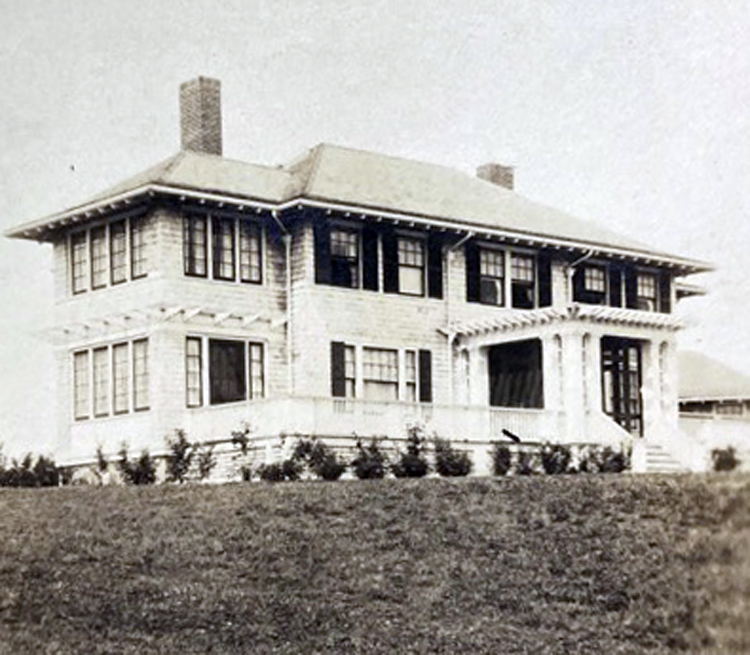
Cape Elizabeth, Maine
Frances
The year 1919 also brought another marriage as Charles Herbert weds Frances Ganoe in a San Francisco ceremony on July 19, 1919. Frances is an enigma. She is one of the most interesting characters in this story and one person I would love to know more about. I have theories about her but finding details has been the biggest challenge of this journey. I am still intrigued and continue to search for information about her. I don’t have her origin story. At the time of their marriage, Frances was 26 or 30. I’m not sure which or if her age was actually somewhere in between or something else. Charles Herbert was 66. The two met in California. I suspect Charles Herbert was visiting with L. D. Adams who lived in California. Frances’ given name was not Frances but rather Anna Belle. There is a possibility that she was orphaned and grew up in a San Juan orphanage for girls in Fresno, California, but I don’t have proof of this. She did marry Earl Ganoe in 1905. They had a son together in 1910 and his name was Earl Devereau Ganoe Jr. Earl Senior was a colorful character who worked carnivals in a food trailer business. He would later promote events and gather acts and rides for charitable organization fundraisers. The family lived in Santa Cruz, California. The marriage didn’t last and the two divorced sometime around 1915. At some point, Anna Belle began going by the name Frances. If she changed her name with the divorce I do not know. She ended up living at the Stewart Hotel in San Francisco which is where I suspect she met Charles Herbert when he came to town on business. After their marriage, they moved to Maine and at some point Earl Jr. joins them. However, his name was now Noel. It just keeps getting more interesting. Charles Herbert would adopt Noel and give him the Maxcy name and this may have been part of the nuptial arrangement. I’m not sure what Noel’s new step-siblings thought about the new family members and I don’t know if Noel ever met any of his new siblings. My father never spoke of Noel. The reason I don’t know Anna Belle/Frances’s age is that every time she appears in a record where age or date of birth is required, her age and date seem to drift around a bit. I think she was born in 1890 but I am not certain. Regardless, she was younger than his children (i.e. my grandfather). Everything about Frances pushed buttons in the family. She was denigrated for possibly being a minority (which I don’t think she was), declared herself as Christian Science, and threatened Josiah Smith with ‘absent treatment’ if he didn’t provide the couple with money when requested. The only oral history of her from my father was that his grandfather made three fortunes and then she squandered them each time. Frances became the scourge of my great-grandfather’s life. When I heard anything about my great-grandfather it is Frances that I remember hearing about. She was the talk long after both of their passings and I kind of like her.
Arizona
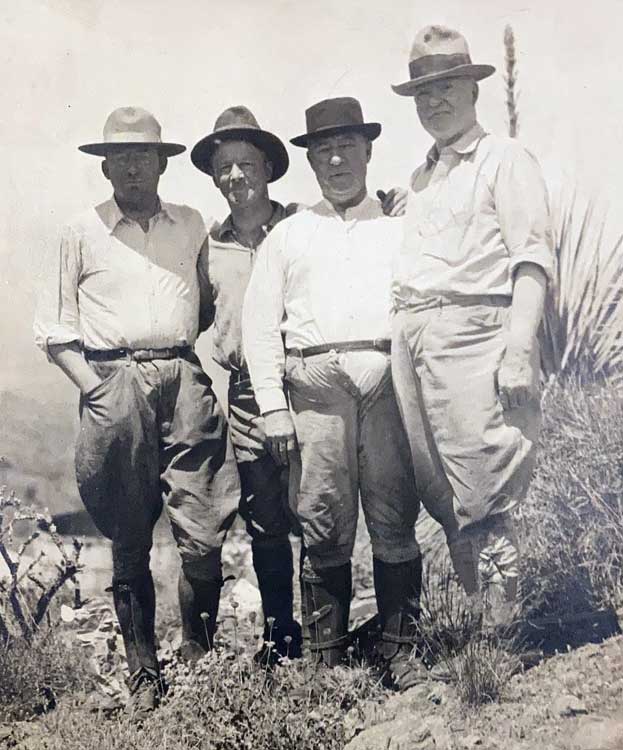
The copper mining business in Quebec was waning and L. D. Adams (Leland) and Charles Herbert were likely looking for other opportunities. Leland was a geologist by education and several years junior to Charles Herbert. He knew the mining business and had been successful as the operations manager onsite in Weedon. I suspect he had Charles Herbert’s trust and because the mining business in Quebec had been good Charles Herbert didn’t need a financial backer like he did when he associated with S. G. Cook or Charles E. Force. L. D. and Charles Herbert had their sights set on Arizona. In 1921, they signed a lease agreement to operate the Signal/McCracken mine outside Kingman, Arizona. Optimism ran high as the locals hoped the mine would once again operate at peak effectiveness. In 1922, Maxcy and Adams rounded up investors in their new venture. Frances took an extended (three-month) trip to Hawaii without Charles Herbert. Upon her return, she made the front page of the San Francisco Chronicle along with the sheriff from Honolulu who happened to be on the boat with her back to San Francisco. The gist of the story is that a new swimming costume law in Hawaii requires that women must be covered and Frances created a loophole by wearing a sheer coverup. Everyone seemed to think this humorous.
In 1923 Frances made the news again when she reports a stolen necklace while visiting a Hollywood hotel. Both she and Charles Herbert seem to be living in California while the mine operations in Arizona are gearing up. Frances purchased jewelry at a retailer in Los Angeles with a promissory note. At the same time, Adams and Maxcy purchased a controlling interest in the Goldbanks Quicksilver Mines Company in Nevada to close out the year.
In 1924 Charles Herbert testified before a Congressional Field Hearing on gold and silver and explains the difficulty of operating a mining business. His description illustrates how well he knew the intricacies of the business. That same year, the Quicksilver mines struggle due to union issues (the Wobblies), Charles Herbert enters into a lease agreement with the city of Kingman and the AT&SF railroad to create an ore loading dock in Kingman and the Signal Mine seems to be doing well. Frances purchases $500 worth of clothing on credit from a store in Oakland which creates substantial issues later.
The Signal Mines went into bankruptcy in 1925 but in 1926 Charles Herbert and Adams are working the Grand Silica No. 1 and 2 mines near Kingman.
In 1927 the Cape Elizabeth house is sold and put into a trust with the three biological children named as benefactors. Charles Herbert holds shares in the Gold Cliff Central Mining Company but I’m not sure if he is an officer.
In 1929 a lawyer from California representing a store and a bank to which Frances owed money (for the purchases she made in 1923) found the pair in Arizona and files suit. Frances loses both suits and must pay the original charges plus fees and interest (about $30,000 in 2022 dollars).
Charles Herbert is Secretary of the Feldspar Mining Company in 1930 and an owner and operator of the Dandy 1-5 mines along with Dan Maxcy in 1931.
There isn’t much public presence after 1932 when Charles Herbert was in his early 80s.
Charles Herbert died on October 15, 1941, in Kingman, Arizona of apoplexy (stroke). He had very little at his death. In probate, only a $50 USPS money order was declared and Frances claimed it. It is uncertain where the money order originated and if someone was therefore helping to support him during his final years. It is believed that Oakes traveled to Arizona to escort the body back to Gardiner but I don’t have a record that this actually occurred. Charles Herbert is buried in the family plot in Gardiner. One family member believed he was cremated but there is no actual record of that occurring nor is there a record of the funeral or a list of who attended.
Summary
I have a lot of information about Charles Herbert but I don’t know what his wives, children, or colleagues actually thought of him. I can’t know what his true motivations were nor his highest moments, biggest disappointments, or fears. I can and do project upon him feelings I believe he may have had. I have my relational experience with my father and grandfather to draw upon so I can ‘reverse engineer’ things about Charles Herbert. I can make suppositions based on what I know about myself and what I perceive about the information, or lack thereof, of how he treated those close to him. I think that the comment from my father about Charles Herbert’s fortunes being lost may speak more to how his children viewed his marrying two considerably younger women. I suspect they were resentful of the perceived, or real, squandering of their inheritance; especially when the oldest, Oakes, appears to have lived his last few years depending upon the charity of two cousins to meet his basic needs.
I suspect Charles Herbert loved his children but from a distance. He certainly provided for them but it seems most of their interactions as adults were transactional. Barbara lived a good portion of her young adulthood in Gardiner with her Uncle Joe and grandmother. Oakes worked for his father for a time but via letters from Charles Herbert to my grandfather, Oakes was ‘ghosting’ their father when it came to liquidating the house and its contents on Cape Elizabeth. Unlike what I know about his younger brother, Josiah Smith, I don’t get a sense that Charles Herbert showed a deep affection for his children. Where Josiah Smith may have overindulged his offspring, Charles Herbert seems to have provided his with just the opposite, benign neglect. I wish I knew more.
I think my great-grandfather was a good salesman. The Mississippi Valley Lumberman, a trade newspaper in Minneapolis, contained several articles about him. They described him as having a hearty laugh, enjoying telling stories, and joking with others. I think this is a fair description as those of us who descended from him certainly possess the witty retort and joking with others trait. He likely could ‘close the deal’ and this was a strength but he was technically focused too. I suspect he used money and relationships to his tactical advantage. His father, Josiah, likely taught him to take risks and not be afraid to fail and this served him well but I don’t think he passed those down to his children. I think the technical aspects of the mining business particularly suited him. His testimony before a House of Representatives Field Hearing in Arizona in 1924, shows a deeper knowledge about running the operation than I knew he possessed. I realize it wasn’t just sales with him.
I think Charles Herbert needed to be in control and I think he must have thought the good times would never end as long as he was in control. I believe he was highly motivated to succeed. I think the idea of success may have been more motivation than actual achievement. He didn’t seem to ever stop nor did he appear to limit his risk and exposure so I’m not sure what his definition of success would have been. He started companies, bought properties, and built a wonderful home in a gorgeous location but none of that seemed to satisfy his desire to do more. It is likely he could have invested some of his wealth in safer returns but It does not appear that he did so. It also appears that he only stopped working when he mentally and physically could go on no longer. Perhaps the entire process of making deals and coordinating resources is what brought him satisfaction.
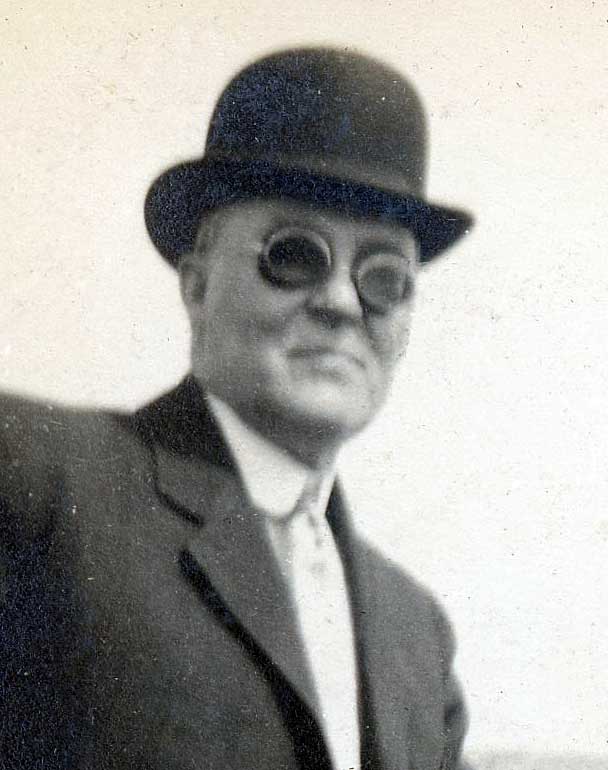
Charles Herbert was not a big man, standing just under 5 foot 7. His passport application (which he acquired at the age of 44) lists him as having dark brown hair, brown eyes, and a light complexion. His high forehead, straight nose, full face, square chin, and medium mouth were also used as descriptors. There wasn’t a description of his weight but pictures from various times in his life would seem to indicate he enjoyed a full meal regularly. I submit that he also enjoyed at least an occasional drink even though his upbringing and early development suggested he might not be tempted.
I don’t know what to make of his attracting younger women to woo and marry. Okay, so maybe I do know but I’m not sure if it was vanity, the challenge of the quest, or the look other men must have given him with a younger woman in his company. Would love to have had a conversation with my grandfather about his feelings about these arrangements or better yet I would have liked to have spoken with Charles Herbert’s first wife, Kate. What would she have thought?
I doubt he was a religious man. He was associated with various denominations but I found no record of him having participated fully in the search for the Devine. In fact, one newspaper article suggested surprise that he had been elected secretary of a company that published Baptist literature. He was associated with Universalists (Tufts), Congregationalists (marriage), Baptists (work), and my father raised us as Episcopalians so it’s likely they were in there also. I believe Josiah Smith was also Episcopalian.
When it came to politics he was unabashedly Republican. He supported republican fundraisers and rallies and demonstrations throughout his life. He hosted delegates from Maine during the national Republican convention when it was held in Minneapolis, he actively helped elect an alderman, and he fought with union workers in Arizona. He supported Calvin Coolidge. My grandfather and father were Republicans too even though Charles Josiah ended up working for FDR. Charles Herbert was a Republican.
I know very little about the end of his life. I imagine the 1930s were especially difficult as his physical and likely mental health waned. My father spoke of meeting his grandfather sometime in the 1930s or perhaps 1940 when Charles Josiah, Marion and my dad took a road trip that direction. My father said his grandfather suggested that my father should work with him in the mines. My father declined but the conversation gives me no clue as to how profitable the mining businesses were at the time. I just don’t know how Charles Herbert sustained himself during the depression years. His mining interests seem to have all played out as there were no records of new ventures. Sometime during that same time frame, Charles Herbert’s youngest brother, Danforth, told family members that he witnessed his oldest brother going through a dead miner’s belongings looking for a pair of spectacles. This would have been prior to Danforth’s death in January 1939. Perhaps Charles Herbert’s children or adopted son provided for him but there is no evidence of this either. Of his brothers, Josiah Smith and Warren were the most likely to be in a position to assist but Josiah died in 1936 and Charles Herbert was not a beneficiary of his will. Warren was struggling with bankruptcies and cash flow problems during the 1930s as well. Charles Herbert and Frances were separated in 1940 the year before he died. There is a record of Frances going to Kingman to spend time with him at the end after his stroke. I don’t know if she did that out of loving care or greed but at least he supposedly was not alone when he died.
I’m not sure what to make of my discoveries about my great-grandfather. I feel a strong sense of participation in the family that I’ve really just come to know and would like to have some epiphany from the experience but it hasn’t come yet. Perhaps I’m not done with the family. Maybe I need to find out more about Charles Herbert’s siblings. Who were they and what were they doing all this time? We’ll see. In the meantime, I hope you have received something from this effort but if not, well…I enjoyed it myself anyway.
Source information and links to various items can be found in this Excel spreadsheet. Some links require subscriptions.
 Head of Tide